Friday, July 31, 2009

Dōjinshi


dōjin, literally "same person" and shi is a contraction that means magazine. Dojinshi works are usually amateur works; however, they are sometimes made by professionals too. Doijunshis' are made like an extension of the original manga, hentai, or videogame. They contain the same characters, and usually the same setting, but what they do is they explore the plot or a certain characteristic more in deep, or they just extend the story to whatever the new creator thinks it should go. They are usually self-publish, so the creator has the liberty to take as much time, and effort as he or she wants. They sound like the OVA, but they different. OVA is based in manga, and they try to change the story, but Dojinshi works can go to wherever the new author wants it to go. They have Dojinshi conventions as well. An intersting aspect of this trend is the copyright. One would think that people can get in trouble for explictly copying someones elses ideas, but the truth if far from that. Many many times they are actually encourage by the original authors. Why? well first there is a chance that people get to know the original the manga from the doijinshi, and second the artits can get fresh ideas from them.

AMV

AMV stands for Anime Music Video. They are fan-made videos that take different video clips from one or more anime series and then a song is added to it. The process can be very long since there can be a great amount of small clips per song, but the results are truly impressive. They have a wide variety of themes, including love scenes, fights, and sometimes just silly moments. AMV's competitions are offently done in anime conventions; also, the conventions usually have exhibition of famous AMV's. Also, not all of them are made from anime clips; they are also made using video games clips. AMV's are quite popular, and when they are well make can serve as a form to get to know new anime, or to just enjoy a cool scene from an anime that one enjoys.

Anime Convention in Colorado

There is going to be an anime convention here in Colorado on September 11, 12, and 13, 2009. Is going to take place in this address:

Marriott DTC
4900 S Syracuse St
Denver, CO 80237

If you register before august 15 the price will be $45. It seems like a great way to get to know more manga, participate in costume and AMV contests, and just to have fun in general. If anyone wants to know more this their website:

http://ndkdenver.org/attending

Masashi Kishimoto


Masashi Kishimoto was born in 1977, and he is a Japanese manga artist. He is well known for his Shonen Jump publication named "Naruto." Masashi created naruto in 1999 and after 10 years the series is still running. Viz media (which its another manga publication company) stated that in 2006 naruto accounted for 10% of their total sells. Masashi Kishimoto says that his inspiration to create the character naruto came from reading the manga Dragon Ball Z; he wanted to imitate the energy and enthusiasm of the main character son Goku while trying to develop a character that was unique at the same time. The manga has over 46 volumes, from which 36 have been already converted into two well known and successful anime series. Masashi Kishimoto fallows some straight forward steps while working in the manga; he first creates the concept and draws a rough sketch. Then, he starts creating some drafts of the concept, and when he's happy with the rusult Masashi makes the draw on ink. After that he makes the shading, and sometimes coloring. Masashi has stated that the most difficult character form him to draw in the last 10 years has been Sasuke Uchiha, which at the beginnings of the series he will miss draw making him look older all of the sudden.

An image of Sasuke.

-Source:
http://en.wikipedia.org/wiki/Masashi_Kishimoto

Shonen Jump

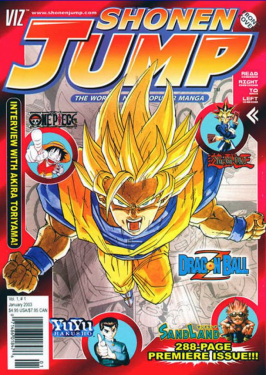
Like an overall general statement Shonen Jump are magazines that are dedicated to the manga, anime, and Japanese culture. Shonen Jump weekly being one the oldest branches is as its name says a weekly magazine that is release in Japan. It features different manga series, video games reviews, and general culture contents. Its known sister in the US is Shonen Jump Magazine. Shonen Jump Magazine is the US version of Shonen Jump, and its release monthly just because its more traditional. Also, since is release only once a month it possess certain differences. For example, the manga that is publish is far more carefully selected, and its chose trying to get the manga that will appeal to an audience from the US. Moreover, not all the manga titles that are selected get to end their series inside Shonen Jump. When the manga becomes unpopular its replaced. I consider it annoying that certain titles are removed from the magazine without having an end; however, with series like Naruto, and Dragon Ball Z that are extremely long is reasonable, but magazines like Shonen Jump are important to spread different and new titles of Manga.

Sunday, July 26, 2009

Death Note first cover


That is the cover of the first volume of the extremely popular Manga series named "Death Note" that was created by Tsugumi Ohba. The series deals with a supernatural note book, and the name of the preson that is written in the notebook shall die. The image has a black background with gray letters that stay the rules of the notebook. On the most predominant featers is the purple cross, probably like a religies symbol; to add more misticism. On top of the name there is a skull with wings, in my opinion it trays to represent an angel of death. Behind the main character named Light Yagami there's a strange figure. From the manga he is a shinigami or god of death, and he suppose write names and decide who is going to die. In the manga and anime Light receives the notebook. Thats is why he's holding that weapon, like a grim reaper. Light is standing in the middle of the cover, like the central figure; his legs are separated, and the way in which he's holding the weapon, creates a sense of movement, like if he was about use it. Death Note is an excellent manga and anime, that has a very complex plot, and many twist and surprices along the way; I will personally recommended to anyone.
Just for fun Im including the basic rules of the notebook; they reveal a little bit of the main idea arround the manga and anime.

Hentai

There is a big difference between those two terms, and its important to understand it. Hentai is basically an adult comic book, and most not be confuse with Manga. Hentai is strictly sexual and pornographic, and many people criticize Manga taking examples from Hentai. Also, Hentai includes comic books, movies, series, and video games. The word Hentai is comomnly used as a term for sexually perverted. Those hentai works usually include a plot to develop the characters and background; however, the goal is always to show a sexual scene. They have a wide range of sexual fantasies and fetish, and they include things like Bakunyu (large breasts), Futanari, Bestiality, Lolicon, Urolagnia, Coropohilia, Incest, and Tentacle rape. The last of the least being having one of the most old representations, or first Japanese hentai works named "Diver and two octopi" design by Hokusai in 1814.

(The following links contain explict images. )
-Sources:
http://en.wikipedia.org/wiki/Tentacle_rape
http://en.wikipedia.org/wiki/Hentai